Whenever you look up recipes, you will sometimes come across cooking methods you don’t understand. This is especially true for beginners. Today, I’m going to explain various cooking methods, so the next time you look over a recipe, you’ll know exactly what to do.
Oven-Based Cooking Methods
The oven is one of the most important pieces of equipment in your kitchen. It has more versatility than one might expect and offers various cooking methods that are very useful. While most kitchens have an oven, don’t fret if you don’t. A good-sized toaster oven or air fryer can serve as a replacement!
Roasting
The first oven-based cooking method we will cover is roasting. Often confused with baking, these two methods are VERY similar, but there are subtle differences. The biggest difference between roasting and baking is temperature. Roasting is done at higher temperatures, typically more than 400 degrees Fahrenheit. Roasting uses dry heat to cook items such as large cuts of meat.
Baking
As mentioned above, baking is a similar technique to roasting. Baking is done at lower temperatures than roasting, typically 375 degrees and below. Baking is used to turn liquids into solids and doughs into a more solid product. Like roasting, baking uses dry heat to cook food. The most famous example of baking would be bread.
Braising
Braising involves cooking meat in liquid in a closed container. This allows for intense flavors to be imparted into the meat. Braising is typically done at lower temperatures than roasting and is allowed to cook for a longer period of time. Short ribs and ox tails are two meats that are traditionally braised.
Broiling
Broiling is another cooking method that is similar to roasting. The main difference is that when broiling, the heat source comes from the top of the equipment, and the food is placed beneath it. This method is great for creating a nice crust on your dish or giving something crispy skin. If you’ve ever worked in a restaurant, a Salamander is a type of broiler. Steak is a dish that is finished in a broiler.
Stovetop-Based Cooking Methods
The stovetop is where most cooking is done in the kitchen. Most cooking methods can be done here. As such, most kitchens will have a stove. But if you don’t, never fear, for single eye burners can be had for relatively cheap prices! This unit from Elite Gourmet is less than $20 on Amazon and has a four-star rating.
Frying
One of the more infamous forms of cooking is frying. Known for creating delicious but unhealthy dishes, frying involves cooking food in hot oil. This can be done on the stovetop in a frying pan or in a deep fryer. You will have more control over the process in a deep fryer, but smaller batches are perfectly fine to cook on the stovetop.
Sauteing
Sauteing is used to cook small batches of food quickly at a high temperature in a little bit of oil. This is mostly used for vegetables, but can be applied to small bits of meat as well. Some popular options for sauteing are bell peppers and onions.
Searing
Searing is used to create a crust on meat, such as steak. This is done by placing a metal or cast-iron skillet on high heat. It has long been said that searing meat locks the juices in, but this is a dubious claim, scientifically speaking. You have to be careful when adding butter or oil to a searing pan, as it can create a lot of smoke and burn easily. High smoke point oils are needed, such as peanut, soybean, and grapeseed oil.
Boiling
Boiling is one of the most basic cooking methods to have in your arsenal. It simply involves cooking meat in boiling hot water, which is 214 degrees Fahrenheit. This is used for eggs, potatoes, and pasta. Down south, we like to boil shrimp, crawfish, and even peanuts!
Simmering
Simmering is very similar to boiling. It involves cooking items in a liquid, but this time BELOW the boiling point, usually between 185 and 205 degrees. This helps keep delicate meat and vegetables from falling apart. While boiling is used to cook things fast, simmering is done at a slower pace to help intensify flavors. Good examples of simmered food include soups and stews.
Poaching
Poaching is another liquid-based cooking method similar to boiling. It is done at an even lower temperature than simmering, between 160 and 180 degrees. This cooking method is used for very delicate cuts of meat and fine-textured foods. The most famous example of poaching is poached eggs.
Blanching
Blanching is when you cook something in boiling hot liquid for an extremely short amount of time. This is usually done to soften something up before it’s cooked using another method. A good example of something that is blanched is cabbage leaves for stuffed cabbage.
Steaming
Steaming is exactly what it sounds like: food cooked with steam. This is achieved on the stovetop by adding a steamer basket to a pot or pan. Seafood is a type of food that does very well steamed. Steaming is also used to soften and freshen up other cooked goods, such as hot dog and hamburger buns.
Other Cooking Methods
Grilling
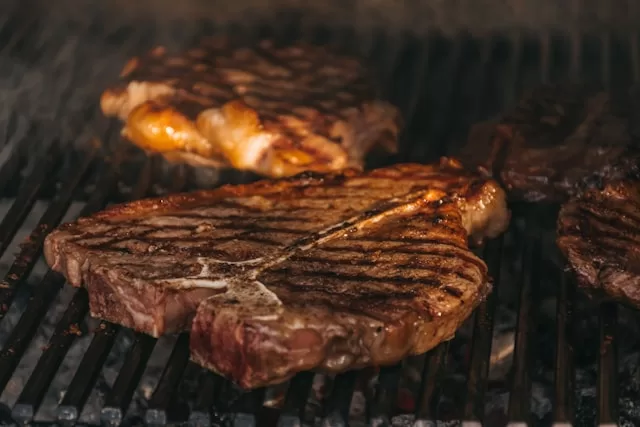
Grilling is a cooking method traditionally done outside, but there are indoor grills available on the market. It is done on a grill, obviously. It should be noted that grilling is not the same as BBQ. Grilling involves cooking fast on high heat, while BBQ is done low and slow. Hamburgers, hot dogs, and steak are good examples of grilled food.
Smoking
Smoking is a cooking method that infuses smoky flavor into foods. This is usually done with a smoker, though alternative methods do exist if you don’t have one. Smoking is typically done at a low temperature over a longer period of time. BBQ is often made via smoking.
Sous Vide
Sous vide is another low and slow cooking method. This one uses an immersion circulation device to cook dishes to exact temperatures. The item to be cooked is vacuum-sealed in plastic and placed in a cooking container. The immersion circulation device is then set to whatever temperature you wish. Steaks can be cooked amazingly with sous vide and a reverse sear.